

News
Inline Digital Printing for More Flexible Packaging Production
Sep
Packaging is often the fixed point in an otherwise responsive factory. Production plans can change quickly, yet a new printed pack may still depend on artwork approvals, printing plates, converter schedules, minimum order quantities and delivery lead times. By the time the packaging reaches the line, the promotion, order or market requirement that triggered it may already have changed.
Inline digital printing for packaging offers a different approach. By moving selected branding, product information and variable data closer to the point of production, manufacturers can delay some packaging decisions until they are needed. The result is not simply a new printing method. It can be a more agile way to manage packaging, inventory and market change.
Why preprinted packaging can restrict production
Conventional preprinted packaging remains the right solution for many high-volume, stable applications. The difficulty appears when a business manages many product variants, retailer requirements, languages, regions or short promotional runs. Each variation can create another packaging SKU to forecast, order, receive, store and control.
That complexity carries operational consequences. A forecast change can leave printed stock unused. A late artwork amendment can delay a launch. A regional order may be too small to justify a dedicated print run. Even when the unit cost of the pack appears competitive, the wider cost can include warehouse space, working capital, administration, changeovers and obsolete stock.
For South African manufacturers supplying several retailers or export markets, those pressures can multiply quickly. The more versions a business must manage, the harder it becomes to keep packaging aligned with actual demand.
How inline digital printing changes the workflow
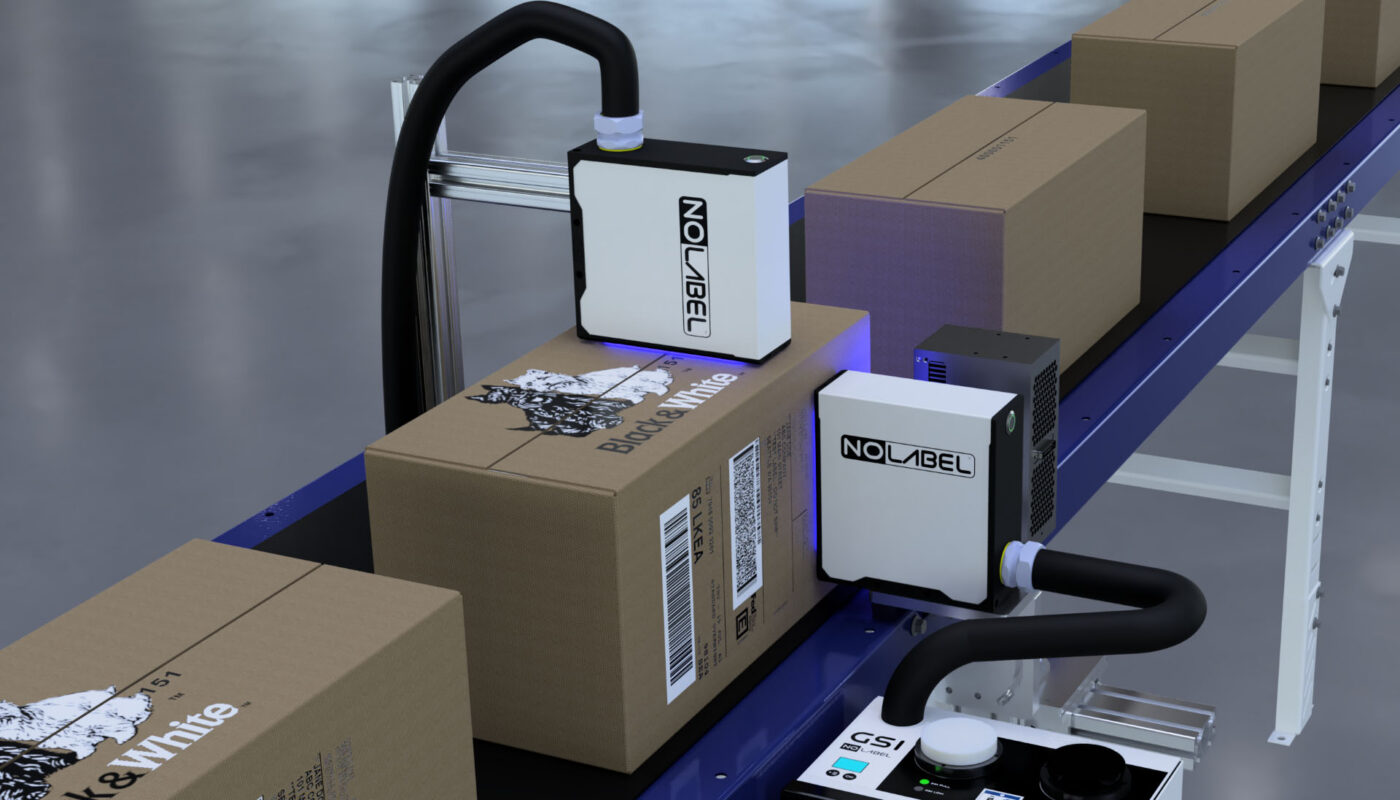
Inline digital printing moves customisation onto, or close to, the production line. A standard or partly preprinted package can be held in stock, while the information that makes it specific to a product, customer, market or promotion is printed later in the process.
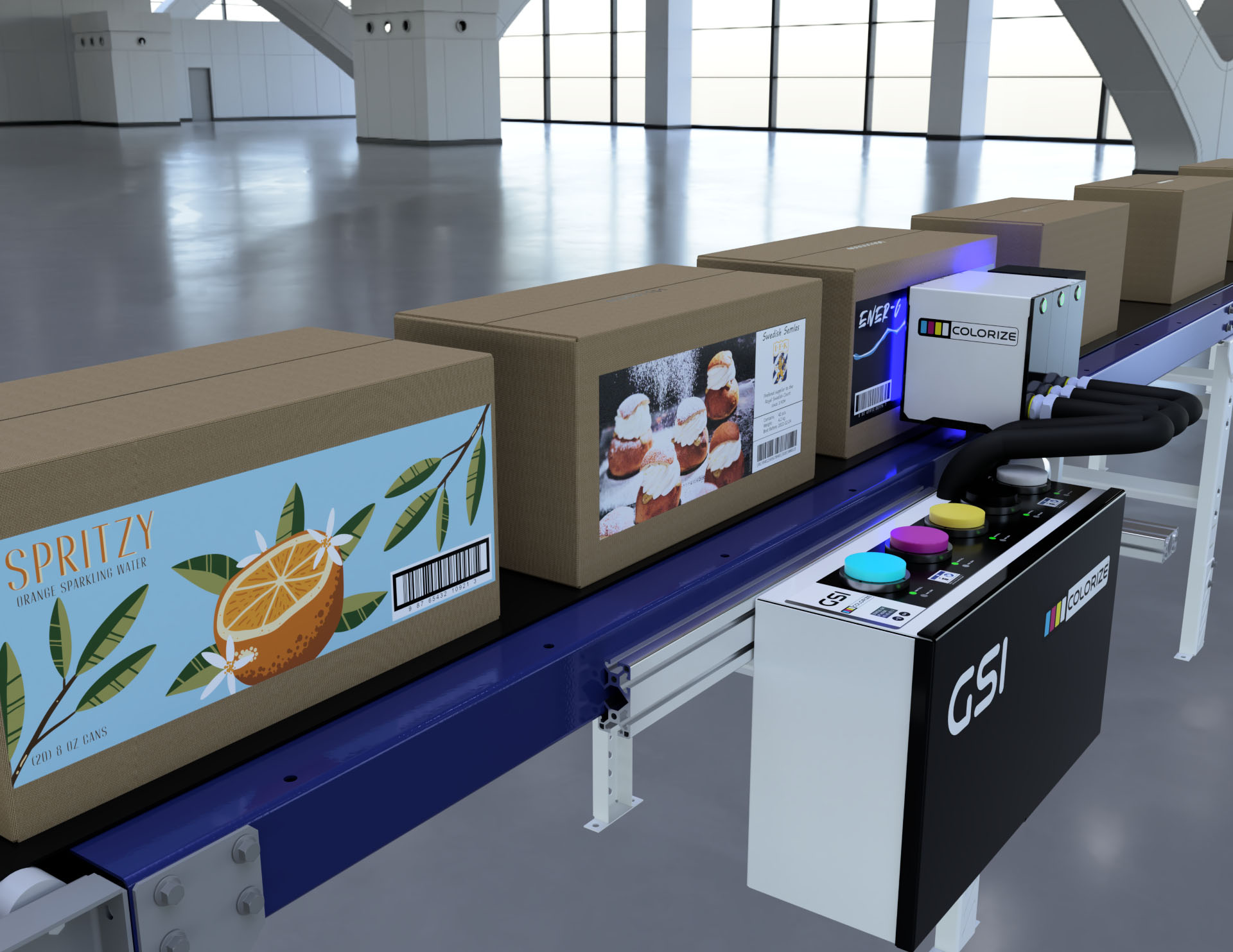
The GSI Colorize™ platform is designed for industrial, full-colour printing directly onto packaging or products in a single pass. Depending on the application and configured system, it can add logos, graphics, product codes and variable information to porous and non-porous materials using UV-curable inks. As with any packaging print application, substrate, ink adhesion, line conditions and print durability should be tested against the production requirement.
This late-stage packaging customisation lets manufacturers keep the base pack consistent while changing selected content on demand. It can be used on a production line or in a near-line process, depending on the packaging format and workflow.

What manufacturers can print on the line?
A well-specified inline system can bring several print requirements together instead of treating them as separate steps. Potential applications include:
- Full-colour logos, brand elements and product graphics
- Product names, flavour or variant information and retailer-specific content
- Variable text, date and time information, batch details and serial numbers
- One-dimensional barcodes, QR codes and GS1-compatible two-dimensional codes
- Regulatory marks, regional or language variations and promotional messages
- Unique information that supports item-level identification or traceability
The value lies in deciding which elements to preprint and which to apply later. Not every pack should be made fully variable. The strongest result usually comes from designing a practical hybrid workflow around run length, print coverage, substrate, speed, quality expectations and data requirements.
Late-stage customisation can reduce packaging complexity
Imagine one base package used across several product variants. Instead of stocking a separate preprinted version for every flavour, region or campaign, the final graphics and information are added when the order is produced. This can help a manufacturer respond to shorter runs without committing to the same volume of dedicated packaging stock.
The same principle can support limited editions, test-market launches, seasonal promotions and customer-specific orders. Marketing teams gain more room to react, while operations can avoid introducing unnecessary packaging variants into the warehouse.
This does not automatically eliminate every printed SKU, nor does it guarantee a saving in every application. It does, however, create an opportunity to compare the complete cost of packaging rather than the purchase price alone.
Look beyond the price of the printed pack
A realistic business case for on-demand packaging printing should examine the full workflow. That includes the number of packaging SKUs currently managed, minimum print quantities, lead times, obsolete stock, warehouse space, changeover time, labour, data handling and the cost of missed or delayed commercial opportunities.
The questions go beyond “What does printing cost?” Manufacturers should also ask how much capital is tied up in preprinted inventory, how often artwork changes, how many short runs are difficult to accommodate, and what happens when a customer request arrives after packaging has already been ordered.
Inline digital printing can be particularly valuable where change is frequent, and packaging variety is high. The return is often distributed across production, supply chain, marketing, sales, compliance and sustainability rather than appearing in one line item.
Preparing for richer product data and GS1 2D barcodes
Packaging is also being asked to carry more useful data. GS1’s 2027 ambition is for retail point-of-sale systems globally to be able to process a Global Trade Item Number from both traditional linear barcodes and two-dimensional barcodes by the end of 2027. It is a capability target, not a sudden ban on existing linear barcodes.
Two-dimensional codes can carry the product identifier together with additional information such as batch or lot numbers, expiry dates and serial numbers, and they can connect consumers or supply-chain partners to online information. For manufacturers, this increases the importance of reliable variable data, accurate data integration and verification at production speed.
An inline digital printing platform can help create the physical code, but the printer is only one part of the solution. Consider data sources, line controls, inspection, code quality, and the intended use of the information together.
What to assess before selecting an inline printing system
The right solution starts with the application, not the equipment. Before specifying a system, assess:
- The packaging material, surface treatment, colour and shape
- Required print width, resolution, colour coverage and opacity
- Line speed, print orientation, product handling and available integration space
- Environmental conditions and the required resistance to rubbing, moisture or chemicals
- Static and variable data sources, line-control requirements and system connectivity
- Barcode verification, inspection and rejection requirements
- Expected run lengths, change frequency and the current cost of packaging complexity
A structured trial using the actual substrate and production conditions is essential. It lets the manufacturer validate appearance, adhesion, durability, data handling, and achievable performance before committing to a final configuration.
A packaging strategy that follows production
Modern manufacturing depends on the ability to respond without losing control. Packaging should support that goal. By moving appropriate branding and variable information closer to production, inline digital printing can help manufacturers reduce unnecessary packaging variants, make changes later and use the same line for a wider range of requirements.
The opportunity is not to print everything differently simply because the technology allows it. It is to remove the constraints that no longer add value and create a packaging workflow that reflects how the business sells, produces and changes.
Explore a more flexible packaging workflow
Molenaar Industrial Technologies can help assess your packaging substrate, print content, line speed, data requirements and integration options to determine whether GSI Colorize™ is a practical fit for your production environment.
Contact the team on +27 (0)11 578 0940 or to discuss your application.